

Avoiding Your Triggers but Eczema Still Flares Up?
· Vivaldy Skin Clinic · View the Instagram post
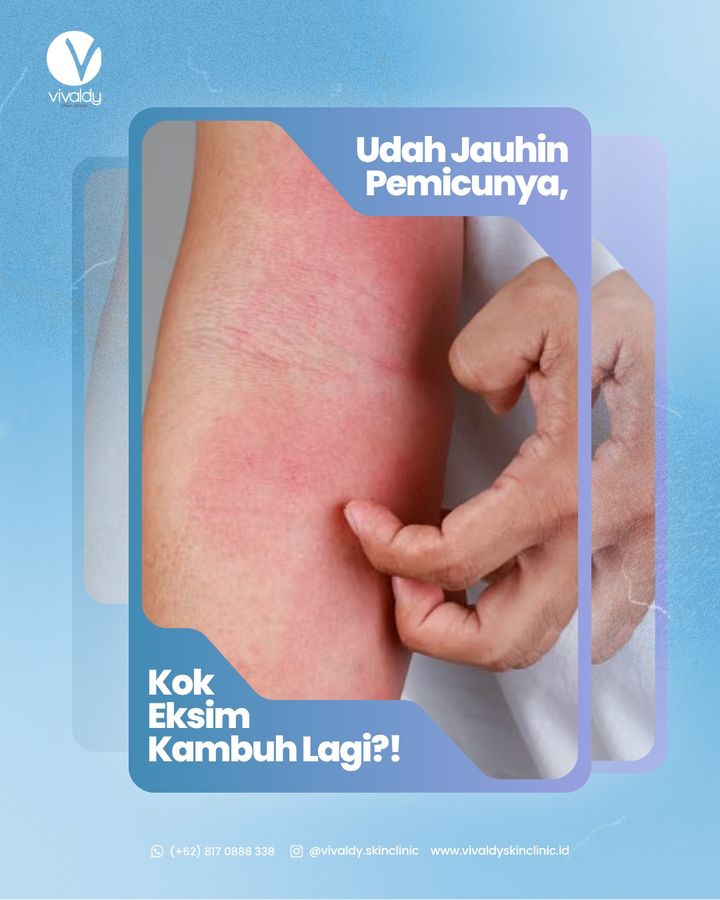
You've switched soaps, moisturised diligently and stayed away from foods you suspect, yet the eczema still comes back. If that sounds familiar, you're not alone. Eczema is a condition that comes and goes, and it often has more than one cause.
Eczema is more than dry skin
Eczema, or atopic dermatitis in medical terms, is a condition in which the skin barrier (the skin's outermost protective layer) is weakened. As a result, water evaporates from the skin more easily, making it very dry, while irritants from outside get in more easily and trigger inflammation.
Because its protection is fragile, skin with eczema reacts more easily to things that cause no problem for other skin. That's why eczema can suddenly flare up, even when you feel you've been avoiding your triggers.
4 eczema triggers that are often missed
1. Stress
Under stress, the body produces too much of the hormone cortisol. This can trigger inflammation and severe itching. Many people only notice their eczema flared after exams, work deadlines or a lack of sleep.
2. Extreme heat and weather
Very hot air makes us sweat a lot, while cold, dry air, including air-conditioned rooms, can strip the skin's natural moisture. Either can quickly trigger a flare-up.
3. Irritating chemicals
Harsh soaps, detergents and artificial fragrances can wear away the skin's already thin protective layer. The skin then turns red and stings. These triggers are often hidden, for example in fabric softeners or hand soap in public places.
4. Food or dust
In some people, certain allergens such as dust or allergy-triggering foods can make the immune system overreact. These triggers differ from person to person, so there's no need to avoid every kind of food without knowing the exact cause.
Everyday care for eczema-prone skin
- Apply moisturiser regularly, especially right after bathing while the skin is still slightly damp.
- Bathe in lukewarm water, not for too long, and choose a gentle, fragrance-free cleanser.
- Wear soft, sweat-absorbing fabrics such as cotton.
- Avoid scratching. Scratching damages the skin barrier further and can lead to infection.
- Note when your eczema flares and what happened just before, to help find your triggers.
When should you see a dermatologist?
See a doctor soon if the itching keeps you up at night, the affected area is spreading, the skin looks wet, crusted or has pus, or the eczema doesn't improve despite moisturising. A dermatologist can assess your skin and decide on the right treatment, so you don't have to keep experimenting with products on your own.
This article is for education and does not replace an in-person examination by a doctor.